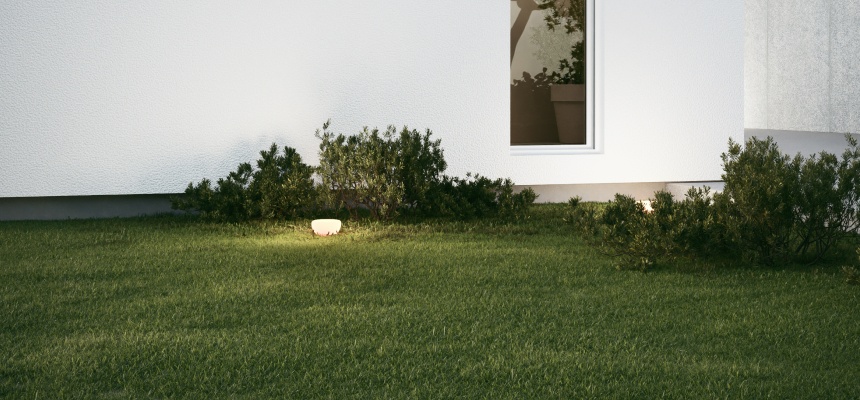
Turf rolls give you an instant lawn; dibling costs far less but takes a season. Here is how we choose between them on a real site.
Both methods end with the same thing — a healthy, even lawn. What differs is how fast you get there, what it costs, and how much water the establishment phase needs.
Lawn laying (turf rolls or sods)
Pre-grown turf is laid edge to edge over a prepared bed and rolled in. The site looks finished the same day, which is why it suits villa handovers, show units and any project with a photography or possession date.
- Instant visual coverage
- Higher material cost per square foot
- Needs consistent water for the first three weeks while roots knit
Lawn dibling
Small grass plugs are planted at a fixed spacing and allowed to spread. Coverage takes one growing season, but material cost drops sharply — which matters across acres rather than square feet.
- Significantly lower cost on large open areas
- Lower water demand during establishment
- Needs weed discipline until the canopy closes
How we decide
If there is a handover date, we lay turf. If the area is large, the timeline is flexible and water is metered, we dibble. On mixed sites we often do both — turf on the visible frontage and dibling on the rear lawn.
Whichever route you take, the sub-grade and soil profile matter more than the planting method. A lawn laid on unprepared soil will fail regardless of how good the turf was.